Practical guide · not a new rule · Source published: unconfirmed
Source: ASBFEO.
One-minute answer
The Australian Small Business and Family Enterprise Ombudsman (ASBFEO) provides a 5-step practical response procedure for disputes with customers, suppliers, or employees, including fact-finding, communication, written notices, Alternative Dispute Resolution (ADR), and court/tribunal processes.
Who this affects
Australian sole traders and small business owners experiencing disputes or non-payment issues in dealings or contracts with customers, suppliers, or employees.
Potential business impact
Prioritising initial communication through contract review and written records, along with utilising ADR (mediation, conciliation, etc.), can help reduce the risk of time and cash flow deterioration due to costly litigation and prevent the breakdown of business relationships.
General matter to check
In case of a dispute, first secure objective evidence such as contract clauses, emails exchanged, quotes, and conversation records, and check the availability of ASBFEO’s dispute resolution support tools and ADR.
Look beyond sales alone
Compare the amount retained, repeat purchases and time involved alongside revenue.
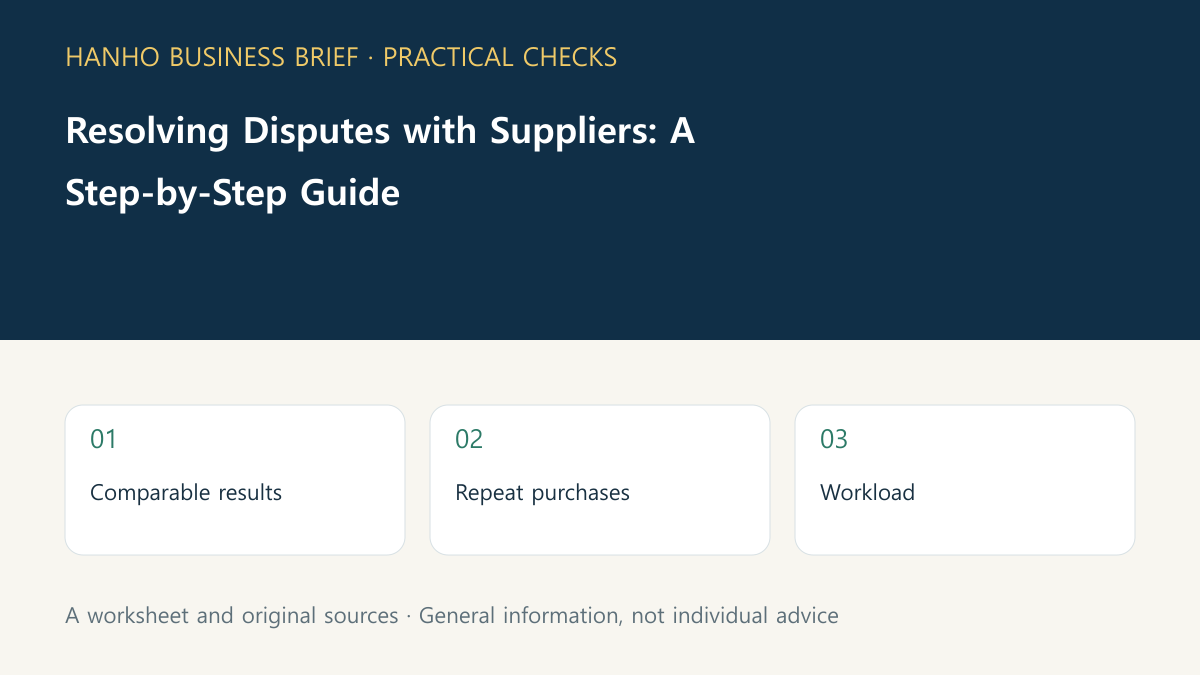
| Area | Question to consider |
|---|---|
| Comparable results | Are revenue, cost of goods and additional costs separated for the same period? |
| Repeat purchases | Can first purchases be distinguished from repeat purchases? |
| Workload | Would stock, delivery or support add time or costs? |
A Hanho editorial worksheet, not a mandatory-document list or an official agency form.
What this article cannot determine
This does not guarantee sales or retention growth. Use comparable measures for your own business.
Check the evidence and scope in the original source →
- Status: guidance
- Official source: Five steps to resolve your dispute
Return to this week’s full brief →
General information only; not individual advice.